
Products & Pipeline
OncoTAb is advancing a pipeline of tumor-targeted products built around tMUC1, a tumor-associated form of MUC1 expressed by the majority of pancreatic cancers.
Our lead development programs use two distinct therapeutic strategies: targeted radiotherapy and T-cell engagement.
Therapeutic Pipeline
Diagnostic & Patient-Selection Technologies
Blood-Based Biomarker
A blood-based biomarker technology designed to detect circulating tMUC1.
Imaging & Patient Selection
A molecular imaging approach designed to non-invasively identify tMUC1-targeted tumor uptake and support potential patient selection for tMUC1-directed radiotherapy.
Targeted Radiotherapy for Pancreatic Cancer
Finding the Tumor. Selecting the Patient. Delivering Radiation to Cancer.
OncoTAb is developing a tMUC1-targeted radiotheranostic for pancreatic cancer. The program combines molecular imaging with targeted radiotherapy. A tMUC1-targeting agent is designed to selectively accumulate in tMUC1-expressing tumors and carry a radioisotope to the cancer.
Molecular imaging may enable physicians to identify patients whose tumors express and are accessible to the targeting agent before therapeutic treatment.
Current Development Program
OncoTAb is evaluating multiple tMUC1-targeting formats to identify an optimal radiopharmaceutical design for pancreatic cancer. Preclinical studies are comparing antibody and antibody-fragment configurations and evaluating molecular and radionuclide parameters that influence pharmacokinetics, tumor penetration, tumor retention, and normal-tissue exposure.
The objective is to optimize tumor targeting and therapeutic index while identifying the most appropriate molecular format for further development.
Tumor Targeting In Vivo
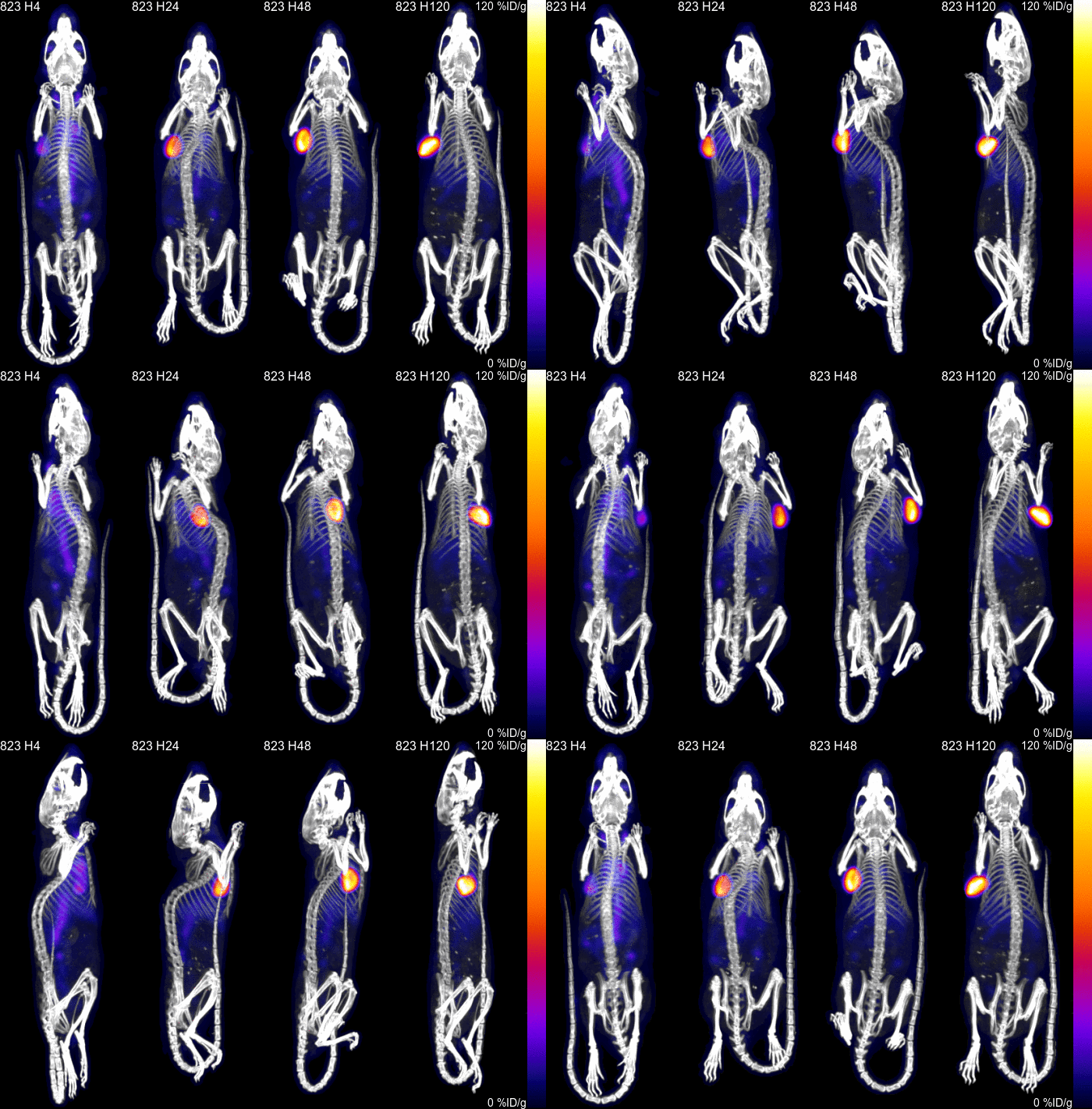
Longitudinal SPECT/CT imaging demonstrates progressive tumor accumulation and sustained retention of 111In-labeled hTAB004, a full-length humanized antibody targeting tMUC1. Adapted from Kelly et al., Theranostics 2020;10(15):6946–6958 (CC BY).
Redirecting T Cells Against Pancreatic Cancer
A tMUC1 × CD3 Bispecific T-Cell Engager
MUCD3 is a proprietary bispecific antibody designed to simultaneously bind tMUC1 on cancer cells and CD3 on T cells. By bringing T cells into close proximity with tMUC1-expressing cancer cells, MUCD3 is designed to activate a targeted immune response against the tumor.
Preclinical Development
Preclinical studies have demonstrated:
- T-cell activation in the presence of tMUC1-expressing cancer cells
- Release of immune effector cytokines
- Cytotoxic activity against multiple pancreatic cancer cell models
- Tumor growth control in pancreatic cancer mouse models
- Enhanced tumor control observed in combination studies with chemotherapy
MUCD3 is advancing through preclinical development, including manufacturing, pharmacology, and safety-related studies intended to support future regulatory development.
A Platform Built Around tMUC1
tMUC1 is expressed across multiple epithelial cancers. While OncoTAb's current development focus is pancreatic cancer, the company's targeting technology has potential applications in other tMUC1-expressing malignancies.
OncoTAb has previously generated preclinical data in triple-negative breast cancer and continues to evaluate opportunities to extend the tMUC1 platform through strategic partnerships.